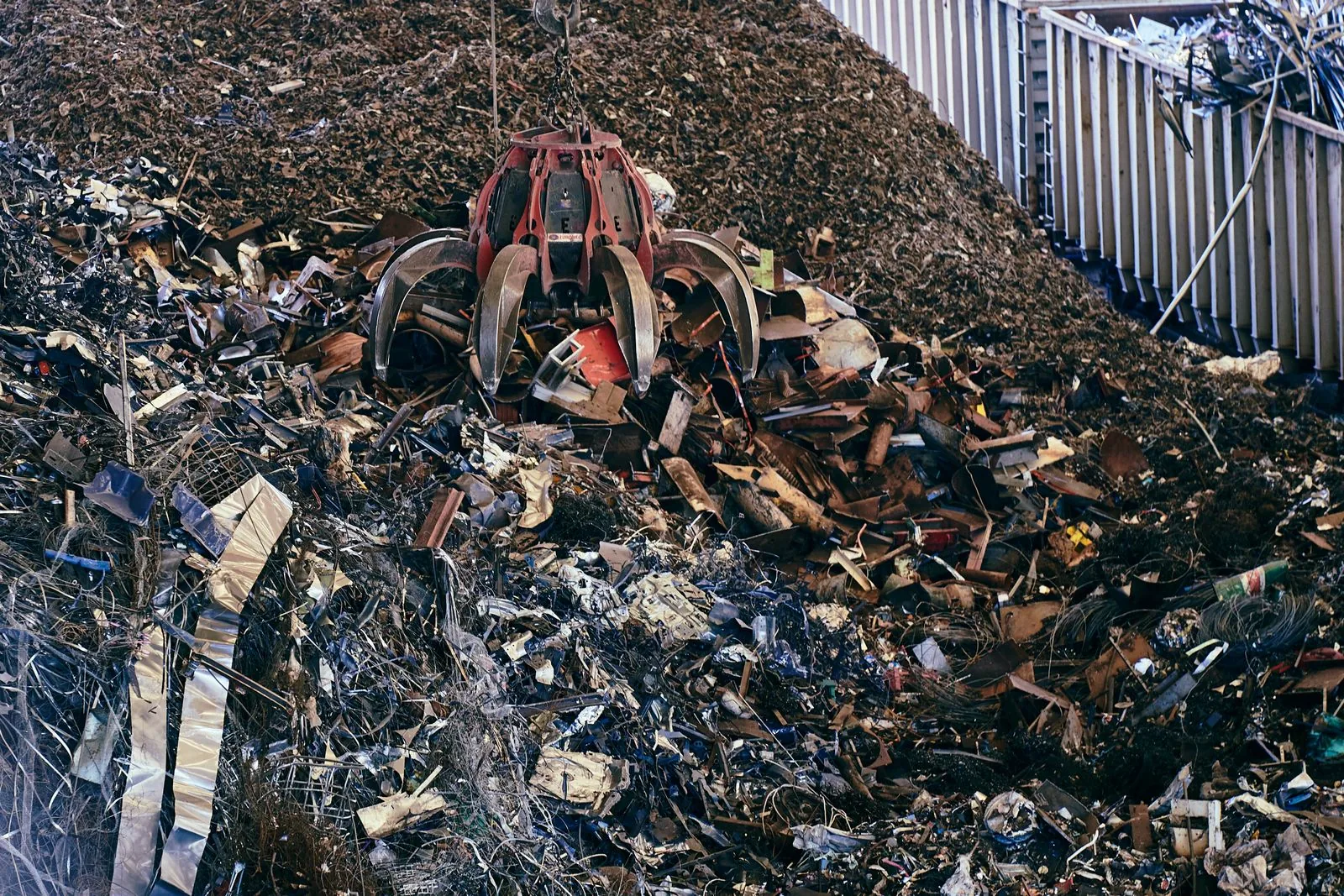
Why metal recycling is so important
Metal is one of the most valuable and sustainably reusable materials in the world. Unlike many other materials, metal can be recycled endlessly without the quality deteriorating. The production of steel from recycled scrap consumes up to 75% less energy than the extraction of new iron ore.
For industrial companies and contractors in Flanders, proper disposal of metal waste is not only legally required but also economically advantageous. Metals have a residual value and are bought by or offset in the processing cost by recognized processors.
Recycling 1 ton of steel saves an average of 1.5 tons of CO2 emissions compared to primary production from iron ore. This makes metal recycling one of the most impactful environmental choices for the industry.
The recycling process step by step
Collection and container transport
The process begins with the collection of industrial scrap waste at your yard, production site, or demolition location. Wima Recycling places a suitable container and collects it when full, or according to your schedule. Each transport is accompanied by the required OVAM accompanying documents.
Sorting and classification
After arrival at the processing facility, the metals are sorted by type: ferrous metals (steel, cast iron) and non-ferrous metals (aluminum, copper, brass, zinc, lead). This separation is essential for optimal processing and value assessment. Contaminants such as rubber, plastic, and glass are removed.
Processing and compaction
Bulky metals are reduced via shredders, cutting machines, and presses to manageable sizes. This facilitates transport to the steel mill and increases the efficiency of the melting process. The result is compact metal bales or shredded scrap ready for transport.
Smelten en raffinage
In the steel factory or non-ferrous smelter, the sorted scrap is melted in electric furnaces. By adding alloying elements, the desired properties of the new metal to be produced are determined. This process yields a product of quality equivalent to primary production.
New raw material in the industry
The recycled metal leaves the smelter as sheets, bars, wire, or profiles and is delivered to manufacturers of vehicles, machinery, construction steel, and consumer goods. The cycle is thus closed and the material is ready for a new life cycle.
Which metals does Wima Recycling process
- Iron scrap and steel waste from industrial machines and constructions
- Cast iron of engines, gears, and heavy machine parts
- Aluminum from production waste, extrusion profiles, and sheet material
- Buyer of cables, pipes, and electrical engineering material
- Brass of fittings, valves, and instrument parts
- Stainless steel from the food processing industry and chemical sector
- Lead from batteries, radiation protection, and lead work
- Zinc from roofing, galvanic coatings and foundries
Economic advantage for your company
In addition to the environmental benefits, metal recycling also offers concrete economic advantages. Metals have a market value that fluctuates with the international metal markets. Depending on the type and quality of the metal, the residual value can be offset against the processing cost or even generate revenue.
Wima Recycling offers transparent rates and fair settlement of the metal value. Contact us for an estimate of the value of your scrap waste.
Having industrial scrap collected in the Sint Niklaas region
Wima Recycling takes care of the complete collection, documentation, and processing of your industrial scrap waste in the Waasland region and port area.
More info about old metals Sint Niklaas